

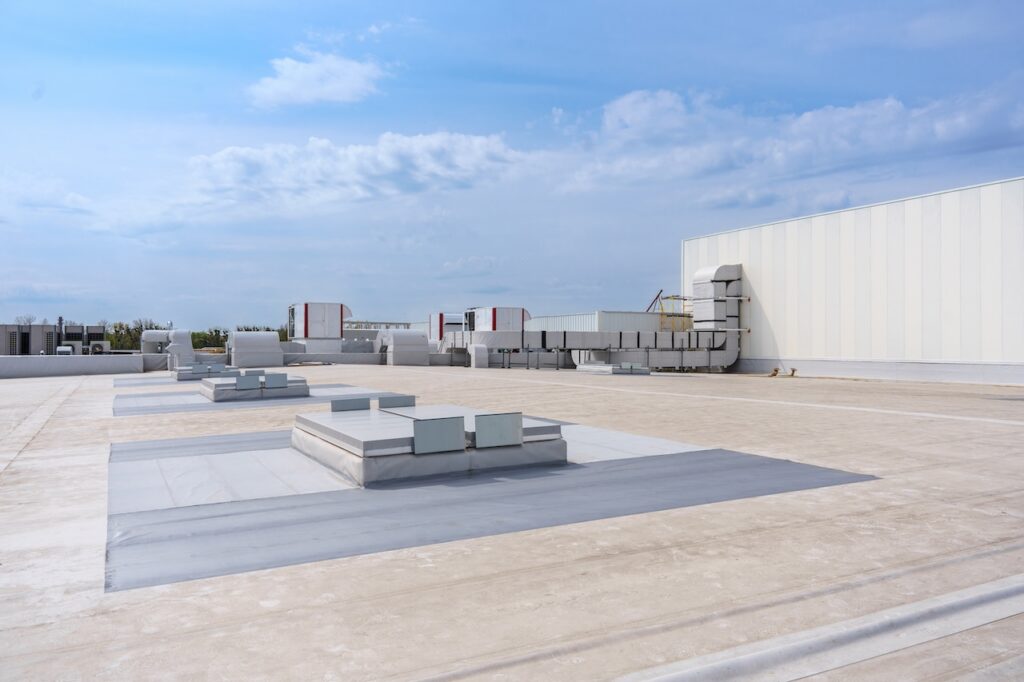
Quick answer: A cool roof reflects more sunlight and releases absorbed heat faster than a standard roof. Cool roof systems use reflective materials to keep surface temperatures down, which lowers cooling costs and eases stress on your HVAC. For many Southern California commercial buildings, they are also required by code.
If your commercial roof soaks up sun all summer, your air conditioner pays the price. Cool roof systems are designed to help by bouncing sunlight away and shedding heat quickly, keeping your building cooler without working your equipment overtime.
Below, we break down what makes a roof “cool,” how it performs on a hot day in Southern California, and whether your property actually needs one.
What Actually Makes a Roof a “Cool Roof”?
Two properties do most of the work.
The first is solar reflectance, which measures how much sunlight a surface bounces back instead of absorbing. The second is thermal emittance, which measures how quickly a surface releases the heat it does absorb. Together, these two numbers get combined into the Solar Reflectance Index (SRI), a single score that makes it easy to compare products. A higher SRI means a cooler roof.
Cool roofs aren’t always bright white; reflective coatings and membranes come in a range of colors and materials, so aesthetics don’t have to suffer. It’s also worth noting the difference between cool roofs and insulation. Insulation slows heat moving through your roof. Cool roof systems stop heat from being absorbed in the first place. They work best together.
How Does a Cool Roof Perform on a Hot Southern California Day?
Picture two buildings sitting side by side under a strong afternoon sun.
On a conventional dark roof, the surface absorbs most of that sunlight. It heats up fast, sometimes reaching well over 150°F, and that heat slowly works its way down into the building. Your HVAC system then runs harder to keep the interior comfortable.
On a building with cool roof systems, the reflective surface sends much of that sunlight back to the sky. Whatever heat it does absorb gets released quickly thanks to high thermal emittance. The result is a roof that stays significantly cooler and passes far less heat indoors.
What Are the Benefits for Southern California Commercial Properties?
Cool roof systems offer a mix of comfort, savings, and durability:
- Lower cooling demand: Your HVAC doesn’t have to fight as hard, especially during peak afternoon hours.
- More comfortable interiors: Temperatures stay steadier for tenants, staff, and customers.
- Less wear on the roof: Reduced heat and UV exposure ease long-term stress on roofing materials.
- Potential energy savings: According to the U.S. Department of Energy, cool roofs can lower roof surface temperatures by up to 60°F, which can translate into meaningful cooling savings depending on your building’s usage, energy rates, and occupancy.
Can You Convert an Existing Roof Into a Cool Roof?
In many cases, yes. If your current roof is in solid structural shape, a reflective coating can often be applied directly over it. These coatings raise solar reflectance and thermal emittance without a full tear-off, which makes them a cost-friendly upgrade for the right building.
The catch is condition. A roof with widespread damage, moisture problems, or an aging membrane may need repair or replacement first. A professional inspection is the best way to find out which path fits your property.
Are Cool Roof Systems Required in California?
Often, yes. Under California’s Title 24 building energy efficiency standards, all new or replacement low-slope roofs must be cool roofs. Steep-slope roofs also fall under these rules in several of the state’s climate zones. According to the California Air Resources Board, these requirements can apply when more than 50 percent or 2,000 square feet of a roof is replaced, recovered, or recoated, with some exceptions.
Because California has 16 climate zones, the exact rules depend on where your building sits. Local cities may also set stricter standards than the state minimum.
Frequently Asked Questions
Can solar panels be installed over a cool roof?
Yes. Solar panels and cool roof systems work well together. The reflective surface helps keep rooftop temperatures down, and cooler panels tend to operate more efficiently. Coordinating both projects at once can also save on labor and setup.
How long does a reflective commercial roof coating last?
Most reflective coatings last around 10 to 20 years, depending on the product, the roof beneath it, and local weather. Regular inspections and periodic recoating can stretch their lifespan further.
What types of commercial roofs can be cool roofs?
Many systems qualify, including single-ply membranes like TPO and PVC, modified bitumen, metal, and built-up roofs treated with reflective coatings. The best fit depends on your building’s structure and current roof.
When does your commercial building actually need a cool roof?
A cool roof makes strong sense when you’re replacing or recoating an aging roof, when Title 24 applies to your project, or when high cooling bills and hot interiors are a recurring headache. If your roof runs hot and your energy costs climb every summer, it’s worth a closer look.
Take the Next Step With Capital Roofing Partners
A cool roof can be one of the smartest upgrades for a commercial building in Southern California, both for comfort and for keeping cooling costs in check. But the right approach depends on your roof’s current condition, your climate zone, and your goals.
Capital Roofing Partners helps owners, property managers, and facility teams across Los Angeles, Orange County, and San Diego figure out whether cool roof systems are a good fit. Schedule a free roof inspection or send us a question, and our team will walk you through your options.
